
jingo valui
Posted on 1769472000.0
Tower-Wise Planning at Godrej Arden for Balanced Daily Living
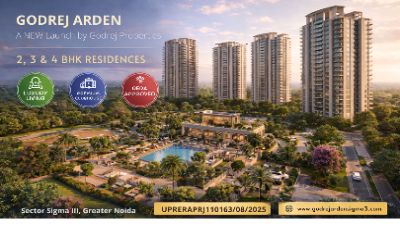
Residential planning at Godrej Arden follows a carefully structured tower layout that focuses on comfort, movement efficiency, and community balance. The project is currently under development and open for booking, while on-ground construction activity continues in phases. The architectural layout focuses on three main elements. First, planners organize how the towers stand across the site. Next, they decide the number of homes in a specific area. Finally, they design the tall buildings to work together.
Nine residential towers form the core of the project. Around 956 apartments are spread across these towers. This structure means the average unit count per tower stays close to 105 or 110 homes. This average creates a useful benchmark for buyers. Some towers carry slightly higher numbers. Other towers remain lighter in density.
Understanding Tower-Wise Unit Variation
Variation in apartment counts across towers does not happen by accident. Planning teams usually adjust density based on plot shape, internal road movement, podium placement, and green space distribution. In this project, some towers contain approximately 90 units, while larger ones accommodate close to 130–140 units.
This pattern creates a mixed-density layout:
- (i) Medium-density towers with around 90–95 apartments
- (ii) Higher-capacity towers holding approximately 130+ apartments
- (iii) Balanced mid-range towers staying close to 100–110 apartments
The noticeable benefit of this approach is better spacing between structures. Crowding inside a single cluster gets reduced, while open areas receive better circulation space. In simple terms, residents do not feel surrounded by continuous vertical blocks.
High-Rise Planning Approach and Vertical Balance
High-rise construction allows more open land to remain available at ground level. At Godrej Arden, vertical development gets handled thoughtfully so daily usage remains comfortable.
Taller towers accommodate more homes, while moderate-height towers balance sunlight access and wind movement. This arrangement supports:
- (i) Better daylight penetration across common areas
- (ii) Improved cross ventilation between buildings
- (iii) Clear sightlines from balconies and windows
Many families who work from home benefit from stable natural lighting. Steady airflow helps maintain indoor comfort during daytime work hours. This natural ventilation reduces the heavy dependency on artificial cooling. At the same time, children who return from school enjoy brighter play areas. These younger residents also benefit from safer open zones within the community.
Balanced Tower Distribution and Privacy Benefits
Privacy often becomes a concern in large residential developments. Closely packed towers usually create window-to-window visibility, which affects daily comfort. Balanced spacing between buildings at Godrej Arden reduces this issue.
Towers remain positioned to avoid direct face-to-face alignment where possible. This helps because:
- (a) Balcony usage feels more comfortable
- (b) Living rooms receive better visual openness
- (c) Bedroom windows avoid direct overlap
During evening relaxation time, residents using balconies for tea breaks or fresh air experience fewer visual disturbances. From a buyer point of view, this layout style usually feels calmer and more personal.
Airflow and Natural Ventilation Advantage
Wind movement plays a major role in residential comfort, especially during warmer months. Tower orientation and spacing allow breeze corridors to flow through internal roads and garden zones.
This planning approach supports:
- (a) Lower heat buildup around buildings
- (b) Faster drying of balconies and utility spaces
- (c) Reduced humidity inside apartments
Natural airflow reduces indoor stagnation during peak summer afternoons. Windows opened for cross ventilation provide steady fresh air circulation for daily usage. This fresh air helps families who maintain work-from-home routines. These design features ensure that the living space remains comfortable throughout the day.
Community Layout and Movement Flow
Smooth movement inside a residential project directly affects daily convenience. Internal road placement between towers improves vehicle circulation and pedestrian safety.
Key practical advantages include:
- (1) Separate pedestrian walkways supporting evening strolls
- (2) Clear entry-exit movement for morning office travel
- (3) Reduced congestion near tower lobbies
Morning school drop-offs and office departures move more smoothly because traffic disperses across multiple internal access points. Meanwhile, evening walking paths remain separated from vehicle movement, improving safety.
Parking and Podium Planning Impact
Parking infrastructure stays positioned at basement or podium levels, which keeps ground spaces open. This design choice improves surface-level usability.
One practical advantage appears during weekend family gatherings when visitor parking stays organized without blocking walkways. Storage movement for household items also becomes easier due to direct lift connectivity between parking floors and residential levels.
Tower Layout and Daily Living Scenarios
Real-life usage patterns often reveal planning quality more clearly than brochures. Several everyday scenarios highlight the benefit of tower distribution.
- (i) Weekday Routine:- Office-going residents usually leave early morning. Lift traffic spreads across towers rather than concentrating in one block. This reduces waiting time and lobby crowding.
- (ii) Evening Family Time:- Children return from school and move toward play zones. Open ground areas remain visible from surrounding towers, improving safety supervision.
- (iii) Weekend Lifestyle:- Balcony usage increases on weekends. Good spacing between towers improves privacy and comfort during relaxation hours.
Density Control and Long-Term Comfort
High density without planning often leads to congestion and maintenance issues. Godrej Arden avoids this through average distribution rather than extreme concentration.
Density control supports:
- (i) Lower pressure on elevators
- (ii) Reduced crowding in common corridors
- (iii) Balanced water and power usage
For long-term residents, these factors directly influence living satisfaction.
Problem–Solution Perspective
Large projects often face challenges related to airflow blockage, privacy loss, and movement congestion. Tower-wise planning at Godrej Arden addresses these concerns through layout spacing, vertical height variation, and traffic channeling.
The solution lies in controlled density distribution and thoughtful positioning. As a result, comfort levels remain consistent across different parts of the community.
Why Tower Planning Matters for Buyers
Many buyers focus only on apartment interiors, even though tower positioning affects everyday comfort more strongly. What really matters includes airflow direction, lobby crowding, sunlight exposure, and walking distance to open areas.
Balanced tower planning improves:
- (1) Quality of daily living
- (2) Ease of maintenance operations
- (3) Community interaction spaces
Similarly, long-term resale value benefits from projects that maintain organized layouts and comfortable living environments.
Final Observation
Tower-wise residential planning at Godrej Arden reflects a structured approach focused on balance rather than extreme density. The project combines nine towers and approximately 956 apartments. This design uses controlled unit variation and high-rise optimization. These features create a community layout that supports privacy and airflow. Furthermore, the plan ensures smooth daily movement for all residents.
Construction activity continues at the site while the booking process remains open. This timing allows early buyers to choose their preferred tower positions. This planning strategy supports daily family routines and work-from-home comfort. It also ensures weekend relaxation without the stress of overcrowding.
Residents receive a thoughtfully arranged living environment instead of just a simple apartment. The design focuses on practical use for the long term.
You should also check out Godrej Varanya Phase 2 | RERA Approved Project at Navi Mumbai
jingo valui
We are delivering you all the real estate properties from the best developers in India.
-
Location
Gautam Buddha Nagar, IN
View Profile